What Is a B200 Server and Who Makes It?

Time:2026-10-30 Author:Isabella
0%

A B200 server is a complete computing system built around NVIDIA’s Blackwell B200 GPU—not a GPU model by itself. A deployed system also needs CPUs, high-speed memory, networking, power delivery, and cooling. Those parts shape its performance as much as the accelerator does. NVIDIA describes the Blackwell GPU as containing 208 billion transistors, a striking figure, but one that does not tell buyers how a finished server will perform in their workload.

The distinction matters when identifying a b200 server manufacturer. NVIDIA designs the accelerator, while server vendors and manufacturing partners integrate it into rack-scale systems. Configurations, cooling methods, and supported networking can differ, so buyers should check the exact product specification rather than rely on the B200 name alone. Gartner’s 2024 forecast put spending on data center systems at $293 billion, up 24.1% year over year. That forecast signals growing investment in infrastructure, but it does not guarantee that every B200 deployment will deliver a positive return.

NVIDIA CEO Jensen Huang called Blackwell “the engine to power this new industrial revolution” in the company’s March 2024 announcement. That is a vendor’s vision, not an independent performance assessment. A useful comparison should also examine measured throughput, power use, cooling requirements, and service support. Details matter. Some public product descriptions leave practical questions unanswered, and that is worth acknowledging. This introduction examines what a B200 server includes, who makes it, and which specifications help distinguish one system from another.
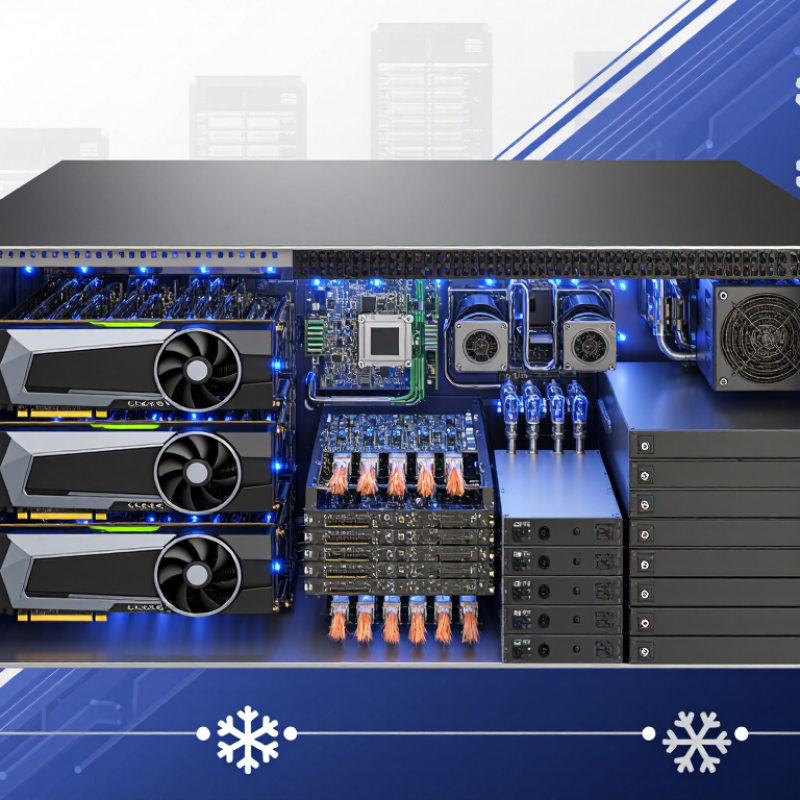
What Is a B200 Server and Who Makes It?

What the Term “B200 Server” Refers To

A “B200 server” generally means a computer system built to use B200 accelerator processors for demanding computing work. It does not describe one universally fixed server model. The term may refer to a single machine, a multi-accelerator server, or part of a larger rack-scale installation. The exact meaning depends on the seller’s specifications.

A typical system pairs accelerators with general-purpose processors, system memory, fast data connections, and storage. It also needs substantial power and carefully designed cooling. Under heavy workloads, fans may run loudly, and warm air must be moved away from the equipment. That distinction matters. Two systems called “B200 servers” can differ in accelerator count, memory capacity, networking, and physical size.

The term describes a hardware configuration, not necessarily who assembled the machine. A system manufacturer or integrator may combine the components and validate them as a working platform. For a useful comparison, check the number of accelerators, supported workloads, power requirements, cooling method, and service coverage. Labels can be imprecise, so the detailed configuration is more informative than the name alone.

The NVIDIA Blackwell B200 GPU at Its Core

A B200 server is built around a B200 accelerator, the component that handles demanding AI calculations. Published specifications list 192 GB of HBM3e memory and memory bandwidth of up to 8 TB/s per accelerator. That fast, nearby memory helps keep model data moving during computation. It can ease bottlenecks, but it cannot eliminate them. Real performance also depends on the model, software, and server configuration.

The accelerator’s power needs shape the whole machine. Builders must plan for dense layouts, strong airflow, and cooling systems that can remove heat from tightly packed components. Heat is real.

The International Energy Agency’s Energy and AI report estimates that data centres used about 415 TWh of electricity in 2024. Its central forecast puts consumption near 945 TWh by 2030.

That broader demand makes power delivery and cooling practical measures of a server’s usefulness, not minor details. A specification sheet alone cannot reveal how a system will perform in a particular data centre; workload testing and facility conditions matter. Even the memory figures deserve context: capacity helps, but it does not guarantee every model will fit or run efficiently.

How B200 Servers Are Designed and Configured

A B200 server is a purpose-built system, not a fixed box. Its design combines accelerator modules with host CPUs, high-speed memory, and fast links between processors. Configurations vary: some systems prioritize tightly coupled accelerators, while others balance compute with storage and networking. That choice affects job performance and serviceability. Details matter.

Inside the chassis, power delivery and heat removal shape nearly every decision. Dense accelerator layouts may require liquid cooling, carefully routed cables, and rack-level planning. The International Energy Agency’s 2025 Energy and AI report estimates that data centers used about 415 terawatt-hours of electricity in 2024, potentially reaching 945 terawatt-hours by 2030. That growth makes power budgets and cooling capacity essential design checks, not afterthoughts. A layout can look elegant on paper yet prove awkward when a technician must replace a module. I would also leave room to question assumptions: workload benchmarks do not always predict real operating conditions. Measure power, temperature, and network traffic under the actual workload before finalizing a B200 server configuration.

B200 Server GPU Memory by Accelerator Count

Illustrative configurations show the combined GPU memory when scaling from 1 to 8 B200 accelerators. Values are calculated using 192 GB of HBM3e memory per accelerator; actual server configurations vary.

Who Makes B200 Server Systems

A B200 server system is not made by one company alone. The accelerator platform defines key requirements, but server manufacturers and system integrators build the complete machine. They fit accelerator modules, host processors, memory, networking, power supplies, and cooling into a validated chassis. Some suppliers design the system themselves; others assemble designs developed by original design manufacturers. That distinction matters.

TrendForce’s 2024 forecast estimated AI-server shipments would reach

1.67 million units, a 41.5% year-over-year increase.

The forecast reflects a growing market for complete systems, not just individual chips. For B200 configurations, manufacturers must engineer for substantial power draw and heat. Liquid cooling may be used, depending on the rack design and workload. Large cloud operators may also work with manufacturers on custom configurations, while other buyers choose standard, tested systems.

One caveat: “B200 server” is not a universal specification. Memory capacity, network interfaces, cooling, and supported software can vary by supplier. Check the system’s detailed configuration and validation documents before comparing offers; the label alone leaves important questions unanswered.

Where B200 Servers Are Used

B200 servers are used in places where workloads need many calculations to run at once. Research teams may use them to train large language or vision models, run simulations, and analyze sizable scientific datasets. They can also support inference, where a trained model responds to requests in real time. Not every workload fits.

Typical settings include cloud data centers, university computing facilities, and enterprise AI clusters. In a data center, these systems are installed in racks with high-capacity power delivery, fast network connections, and carefully managed airflow. Operators monitor temperatures and utilization because sustained computing loads can produce substantial heat. A crowded rack without suitable cooling can limit performance.

The hardware is most useful when software can distribute work across multiple accelerators. Teams often plan data storage, networking, and model tuning alongside the server itself; otherwise, processors may wait for data instead of computing. That trade-off is easy to underestimate. Smaller experiments or occasional workloads may be better served by less powerful equipment, since purchase, power, and cooling costs remain even when utilization is low. Deployments should be assessed against measured workload needs, not headline performance alone.

FAQS

What does “B200 server” mean?

It usually describes a computer system built around B200 accelerator processors. It is not one fixed model.

Does every B200 server have the same configuration?

No. Accelerator count, memory, networking, storage, cooling, and physical size can vary. The label alone says little.

What components are typically included?

A system may combine accelerators, general-purpose processors, system memory, fast data connections, storage, power supplies, and cooling equipment.

Why does cooling matter?

Heavy workloads create substantial heat. Fans may run loudly, and warm air needs a clear path out. Some rack designs use liquid cooling.

Who builds a complete B200 server?

Server manufacturers or system integrators assemble and validate complete platforms. Some design systems themselves; others build from designs developed by original design manufacturers.

What should buyers compare?

Check accelerator count, supported workloads, memory capacity, network interfaces, power needs, cooling method, and service coverage. Read validation documents, too.

Are all systems designed for the same workloads?

No. Supported workloads and software can differ by configuration. Ask for specifics rather than trusting a short product label. I might be missing a detail.

What should operators plan for?

Allow for substantial power use, heat removal, and enough rack space. Exact requirements depend on the system. Easy to overlook.

Conclusion

A B200 server is a high-performance computing system built around a B200-class accelerator, designed to handle demanding artificial intelligence, data analysis, and scientific workloads. Its central component provides substantial parallel processing capacity, while the server’s supporting architecture—such as host processors, memory, storage, networking, power delivery, and cooling—helps keep the system balanced and reliable.

B200 server configurations vary according to workload and deployment needs, from individual systems to larger, interconnected clusters. A b200 server manufacturer typically designs or assembles the complete platform, selecting compatible components and validating thermal performance, power requirements, and system integration. These servers are used in environments that need to train or run complex models, process large datasets, or accelerate technical computing. Choosing a suitable configuration depends on factors such as performance goals, infrastructure, scalability, and operational requirements.

Isabella

Isabella

Isabella is a dedicated marketing professional with a sharp focus on driving brand growth and engagement through strategic content creation. With an extensive background in digital marketing, she combines her passion for storytelling with her keen understanding of industry trends to deliver......